Why Loose Oxygen Tubing Creates a Serious Fall Risk
In this article
Introduction & Context
Many Americans who depend on oxygen therapy at home must use long tubing to maintain their mobility and independence. But this necessary tubing, if left unmanaged or loosely coiled, can become a significant fall hazard — posing daily risks that threaten both safety and quality of life.
An estimated 11 to 16 million adults in the United States are living with diagnosed COPD, according to the Centers for Disease Control and Prevention and the American Lung Association. The prevalence of COPD rises sharply with age, making it a widespread concern among older adults. Reports from the COPD Foundation and U.S. Pharmacist note that the disease burden varies significantly by state and remains one of the leading causes of illness and death nationwide.
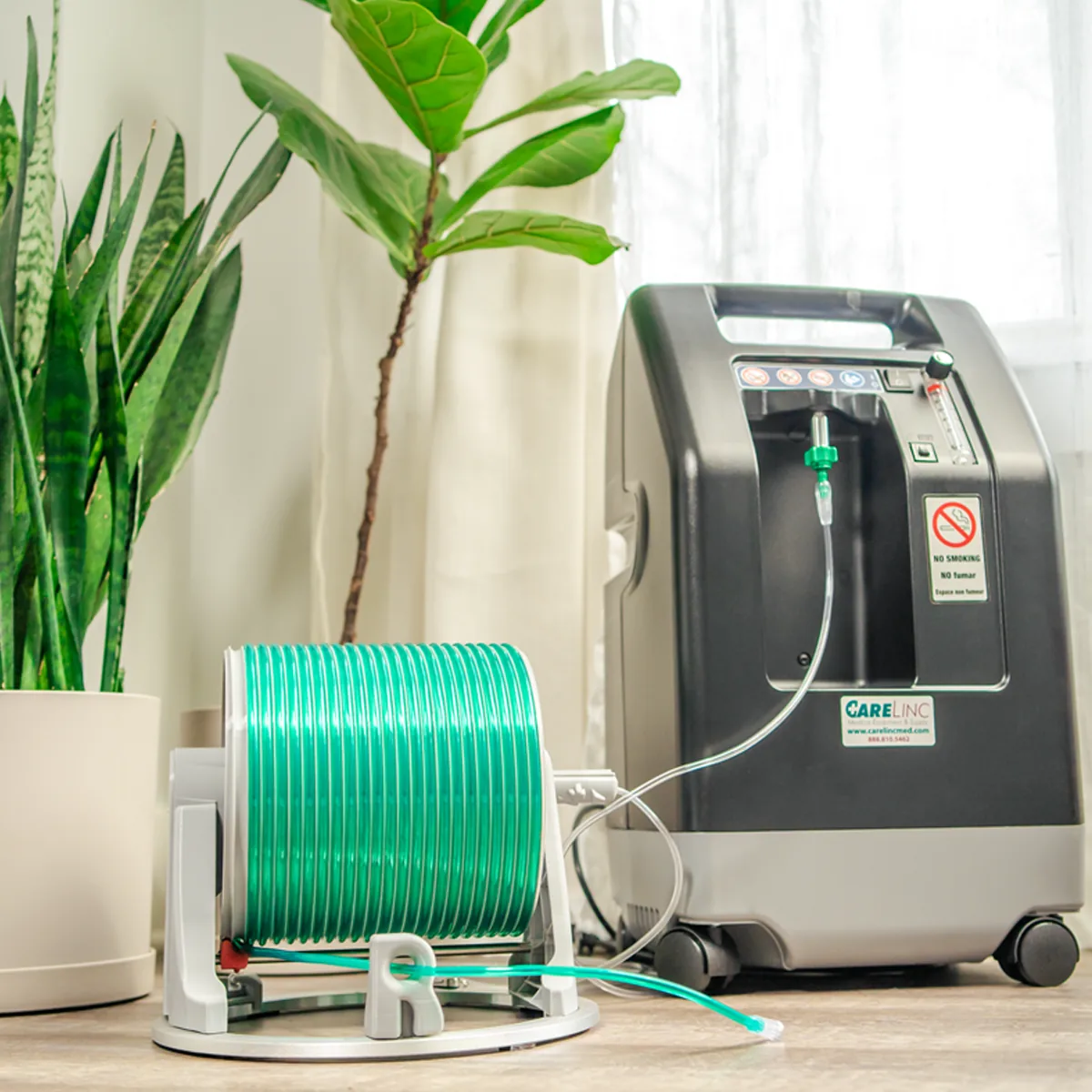
The danger is not theoretical. Research published in PubMed and other medical journals documents how unmanaged oxygen tubing leads to real accidents, often resulting in injury and costly medical interventions. This blog post will explore the numbers that expose the true scope of this problem, quantify the risk, and explain how practical solutions like the Reel Free Buddy oxygen tubing reel for home oxygen users can help reduce loose tubing hazards and the daily costs of unmanaged oxygen lines. Prevention, as the data show, is not just preferable — it is imperative for individuals, caregivers and the health system alike.
Prevalence of COPD & Oxygen Use in the U.S.
According to the CDC, in 2021 more than 15 million U.S. adults (≈ 6.4%) reported a physician diagnosis of COPD (including chronic bronchitis and emphysema). Other sources note stable prevalence of ~6.5% (≈ 14.2 million) in 2021. More conservatively, some trend briefs list ~11.7 million adults (≈ 4.6%) reporting COPD or related diagnoses as of 2022 (American Lung Association). Because many people with COPD will require supplemental oxygen therapy at advanced stages, the population at risk — oxygen users — is a subset, but meaningfully large. Thus, millions of Americans are potentially exposed to risks from long oxygen tubing in their homes.
Fall Risks & Costs Among Older Adults / Oxygen Users
General Fall Statistics in Older Adults
Among adults 65+, more than 1 in 4 falls each year. About 37% of falls lead to an injury requiring medical treatment or activity restriction for at least one day. Each year in the U.S.:
- ~3 million emergency department visits for older adult falls
- ~1 million hospitalizations for fall-related injury
In 2020, non-fatal falls among older adults cost ~$80 billion in healthcare costs (National Council on Aging). The average cost of an inpatient fall-related hospitalization is ~$18,658; average ED visit ~$1,112. Older estimates projected that by 2020, fall injury costs would reach ~$43.8 billion for adults 65+ (Joint Commission Journal).
Millions of Americans with COPD rely on home oxygen, a patient population especially vulnerable to falls. Studies show COPD patients have a significantly elevated fall risk: nearly 30% experience falls with serious consequences within a two-year period. Thus, falls are common, dangerous, and extremely expensive in aggregate.
Specific to COPD / Oxygen Users
While general fall stats are well documented, less data is available specifically isolating falls caused by oxygen tubing. However:
- COPD patients often take medications (e.g. benzodiazepines, opioids, sedatives) that increase fall risk. In one study, 65% of COPD patients were prescribed at least one “fall-risk increasing drug,” and ~30% experienced a fall with injury in the two years before death (Respiratory Therapy).
- Articles about the tripping hazards of oxygen tubing cite anecdotal and risk concerns of tubing snags and trips in the home (memic.com).
- Fall-prevention guidelines explicitly list “effective management of oxygen tubing” as part of home-safety advice (cns-cares.org).
Taken together, patients on oxygen are at intersecting risk: age, chronic condition, medications, and the physical hazard of tubing.
How Buddy Organizes Excess Tubing
Buddy stores excess tubing on a reel. The line unreels as you walk away, and you press the remote button to retract it. Buddy does not detect slack or automatically retract while you walk. Keep checking doorways and walking routes for loose loops.
Evaluate the Product for Your Home
Consider your room layout, tubing requirements, and support needs. Confirm compatibility before buying and consult your oxygen supplier about your prescribed setup. See the purchase page for current pricing and the return policy for its terms.
Understand the Limits
A tubing reel does not eliminate every trip hazard or guarantee that falls will be prevented. General fall statistics do not establish a measured reduction in falls from using Buddy. Follow the product instructions and discuss your individual fall-prevention needs with your care team.
Sources
- CDC. Databrief No. 529 (PDF)
- CDC. Databrief No. 529 (HTML)
- Oxygen tubing reel for home oxygen users
- American Lung Association. COPD in Your State
- American Lung Association. COPD Trends Brief
- ReadyO2. COPD Statistics
- COPD Foundation. State Variation in COPD Burden
- U.S. Pharmacist. COPD: Prevalence, Risks, and Mortality
- PubMed. Fall Risk in COPD (study)