Tubing Falls: Why Oxygen Tubing Is a Leading Fall Risk at Home
Tubing falls are a serious and often overlooked home safety risk for people using oxygen. Long oxygen tubing can create loops, coils, and slack across floors—making it easy to trip, lose balance, or fall, especially for older adults and anyone with limited mobility. This guide explains why tubing falls happen, who is most at risk, and practical ways to reduce fall hazards without sacrificing freedom to move.

What are tubing falls?
Tubing falls happen when someone trips, slips, or becomes entangled in oxygen tubing while walking, turning, or standing up. Unlike rugs or power cords, oxygen tubing moves with the user. That movement can create unpredictable slack, loops, and coils that catch feet, walkers, wheelchairs, or furniture legs.
Many oxygen users describe tubing falls as “sudden.” They aren’t always caused by walking fast—often they happen during normal, everyday actions like turning around, backing up, or navigating a doorway.

Why oxygen tubing causes falls
Oxygen tubing is essential—but it can become a fall hazard when there’s too much slack or the tubing routes through high-traffic areas. Common reasons tubing falls occur include:
- Excess tubing pools on the floor and forms loops.
- Clear tubing blends into flooring, making it easy to miss.
- Turns and pivoting tighten loops around feet or mobility aids.
- Tubing catches on furniture and suddenly “snaps” tight.
- Doorways and corners create friction, causing uneven slack.
Who is most at risk for tubing falls?
Anyone using home oxygen can experience tubing falls, but the risk is higher for:
- Older adults
- People using walkers, canes, or wheelchairs
- Those using 25–50 feet of oxygen tubing
- People with balance, strength, or vision challenges
- Caregivers assisting oxygen users
If you’ve ever had to stop, untangle, and re-route your line multiple times per day, that’s a strong signal that your setup is increasing your risk of tubing falls.
Why tubing falls are dangerous
A tubing fall can lead to serious injuries such as fractures, head injuries, and emergency room visits. For oxygen users, falls can also damage oxygen equipment, pull on a cannula, or interrupt oxygen delivery.
Over time, fear of falling can cause people to move less and become less independent. The good news: tubing falls are often preventable with a few practical changes.
How to prevent tubing falls at home
Preventing tubing falls is about controlling slack, improving visibility, and reducing the chances that tubing will loop across walkways. Start with these high-impact steps:
1) Reduce excess slack
Extra tubing on the floor is the number-one contributor to tubing falls. Use only the tubing length you actually need, and avoid letting long coils sit in open areas.
2) Route tubing away from traffic zones
Try to route tubing along wall edges rather than straight across rooms. Keep it away from doorway thresholds, chair legs, and tight corners where it can snag.
3) Increase visibility
Many falls happen because tubing is hard to see. If you have low vision or dim lighting, consider higher-visibility tubing and keep floors well lit—especially from bedroom to bathroom routes at night.
4) Reduce twisting and coiling
Swivel connectors can reduce twisting that leads to curling and looping. Less twisting means less “spring-like” tubing behavior on the floor.
5) Use tubing control systems (optional)
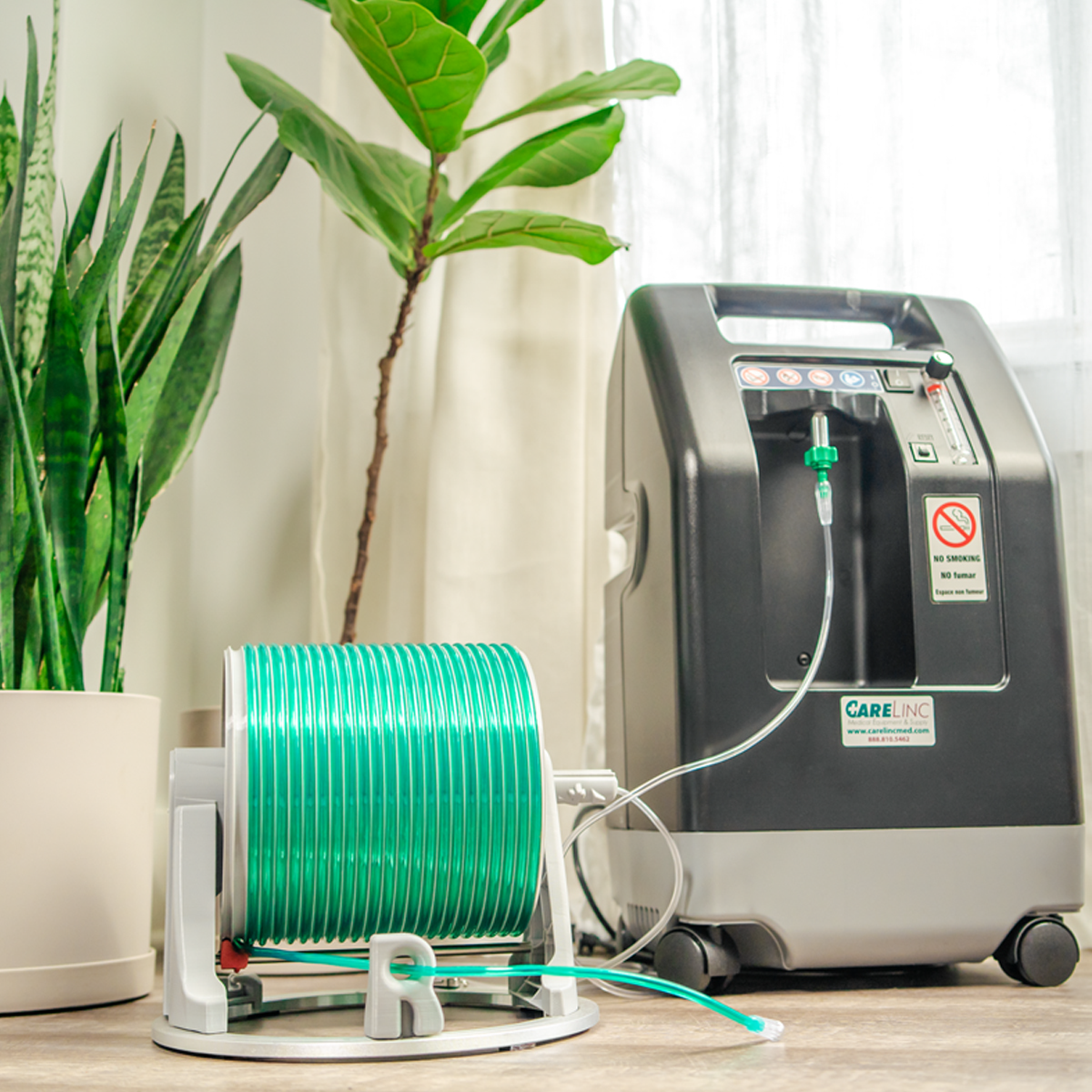
Some households choose tubing management systems that retract unused tubing and reduce floor clutter. The main goal is to keep only the tubing you need in the room—nothing more.
Room-by-room tubing fall checklist
Bedroom
- Keep tubing away from the bed frame and nightstand legs
- Use a clear, unobstructed path to the bathroom
- Use a nightlight to improve tubing visibility
Living room
- Route tubing behind furniture when possible
- Keep tubing away from recliner and chair mechanisms
- Remove small throw rugs that can combine with tubing to create trip hazards
Kitchen
- Keep tubing away from high-traffic areas around counters
- Watch for snag points on chair legs and table corners
- Avoid routing tubing across doorway thresholds
Hallways
- Keep slack minimal (hallways are “high speed” zones)
- Ensure lighting is bright and consistent
- Keep floors clutter-free
Caregiver tips to reduce tubing falls
Caregivers often report that tubing falls are one of their biggest concerns—because a single fall can lead to a rapid decline in confidence and independence. A few caregiver-focused tips:
- Do a quick “tubing check” during transitions (bed → bathroom, chair → hallway)
- Watch for tubing wrapped around walker legs or chair bases
- Encourage slower turns and pivots (loops tighten during turning)
- Set up consistent routing paths so tubing behaves predictably
FAQ: Tubing falls
What are tubing falls?
Tubing falls happen when someone trips, slips, or becomes entangled in oxygen tubing while walking, turning, or standing up. Extra slack can pool on the floor and create loops that catch feet, walkers, or furniture.
Why does oxygen tubing cause trips and falls?
Oxygen tubing can blend into flooring, pool as excess slack, wrap around furniture legs, and tighten into loops during turns. Sudden pulls on the line can also throw off balance.
How can I prevent tubing falls at home?
Reduce excess slack, route tubing away from walkways, increase visibility, use swivels to reduce twisting, and consider tubing management systems that retract unused tubing to keep it off the floor.
Medical note: This article is for general safety education and does not replace medical advice. For guidance specific to your oxygen therapy, speak with your clinician or home oxygen provider.