Tangling around furniture
Long oxygen tubing can catch on chair legs, corners, beds, and doorways throughout the home.
Oxygen tubing, oxygen hose, and oxygen concentrator tubing all play a major role in daily comfort and safety. This guide breaks down tubing types, nasal cannulas, water traps, connectors, and smarter ways to manage extra line so your home oxygen setup stays cleaner, safer, and easier to live with.
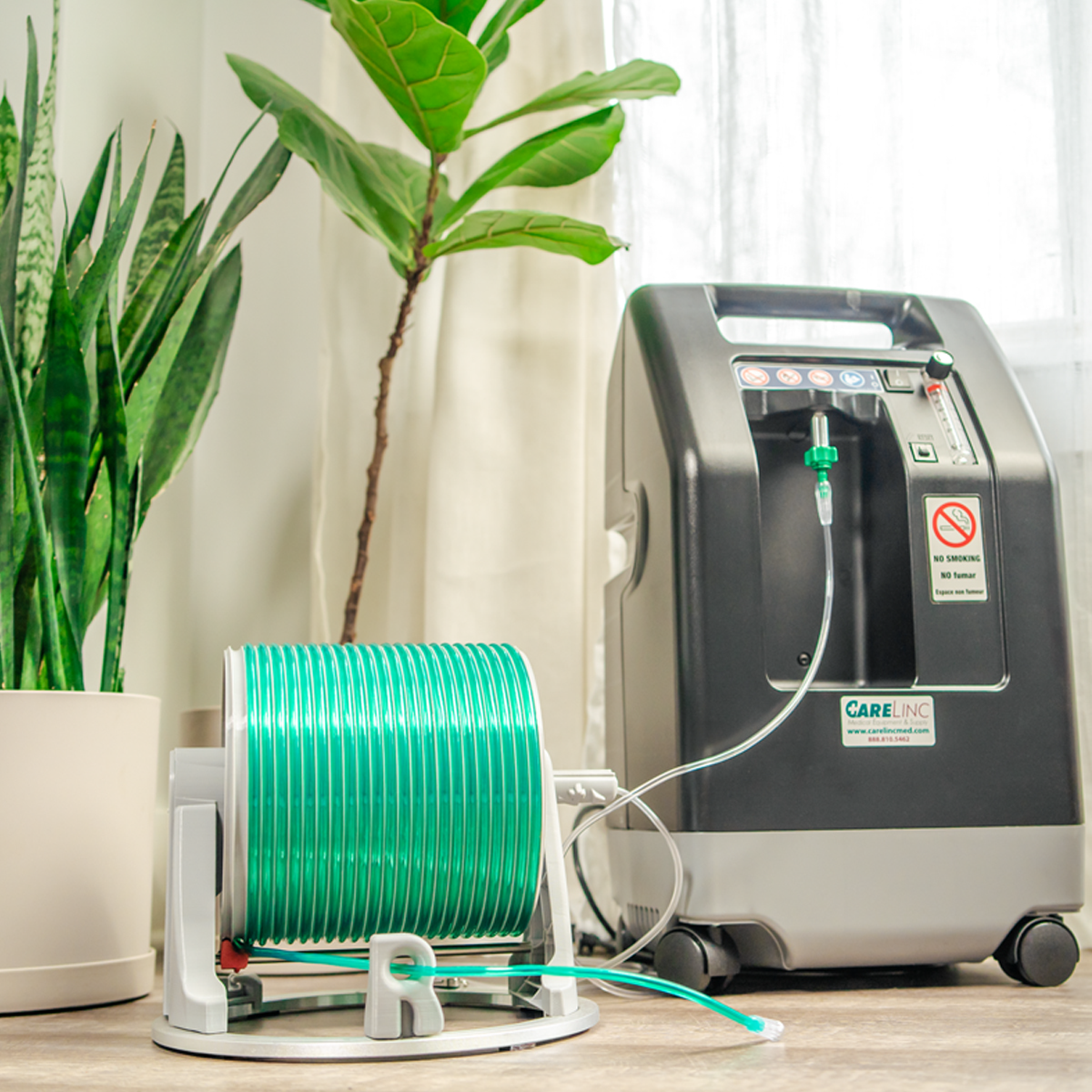
Basics
Oxygen tubing is the flexible line that carries oxygen from a source such as a concentrator or tank to the user. Many people also call it an oxygen hose, oxygen tube, oxygen line, or o2 tubing. In most home oxygen setups, these terms are describing the same essential part of the system.
Whether you use a nasal cannula or an oxygen mask and tubing setup, the tubing is what bridges the machine and the user. Choosing the right oxygen concentrator tubing matters, but so does how that tubing is managed throughout the home.

Common issues
Longer oxygen hose medical setups give users more freedom to move, but they also create more opportunities for tangling, dragging, loops, and clutter. That is why so many people search for better oxygen tubing management.
Long oxygen tubing can catch on chair legs, corners, beds, and doorways throughout the home.
Extra tubing often forms slack loops on the floor, which can make movement more frustrating.
Even quality tubing can kink when it twists sharply, gets pulled tight, or piles into itself.
Loose oxygen lines can make a room feel cluttered and harder to keep clean or organized.
People often shop for non kink oxygen tubing, coiled oxygen tubing, or an oxygen hose protector, but the real daily issue is usually unmanaged slack across the floor. That is what creates tangles, snags, and constant readjusting.
See a smarter solution ↗
Accessories + management
Many home oxygen users rely on accessories like a nasal cannula, oxygen tubing water trap, swivel adapter, tension clips, or an oxygen tube holder. These can help, but they work best when combined with smarter overall tubing control.
This is why more people searching for an oxygen hose retractor or oxygen tubing reel choose a system that actively manages the line instead of just holding it in place.
Go to product page →Each one helps with a different part of the oxygen setup.

Why it matters
A good home oxygen setup is not just about the machine. It is about how the entire system works together. Even the best oxygen concentrator tubing can become frustrating if it constantly drags, tangles, or piles across the floor. That is why smarter tubing management makes such a big difference in daily life.
Keeping extra oxygen lines controlled helps reduce clutter across rooms and pathways.
Controlling the slack helps reduce the conditions that cause tubing to twist or knot.
Moving room-to-room feels easier when the tubing is not constantly dragging behind you.
The right system helps oxygen therapy feel less frustrating and easier to live with each day.

Best setup
Choose reliable oxygen tubing or oxygen hose medical that fits your machine and daily oxygen routine.
Depending on your setup, a swivel adapter, oxygen tubing water trap, or clips may improve comfort and routing.
The biggest upgrade is keeping excess tubing managed instead of letting it collect in loose loops across the floor.
A true oxygen hose retractor or oxygen tubing reel gives long tubing a cleaner, more controlled place to go.
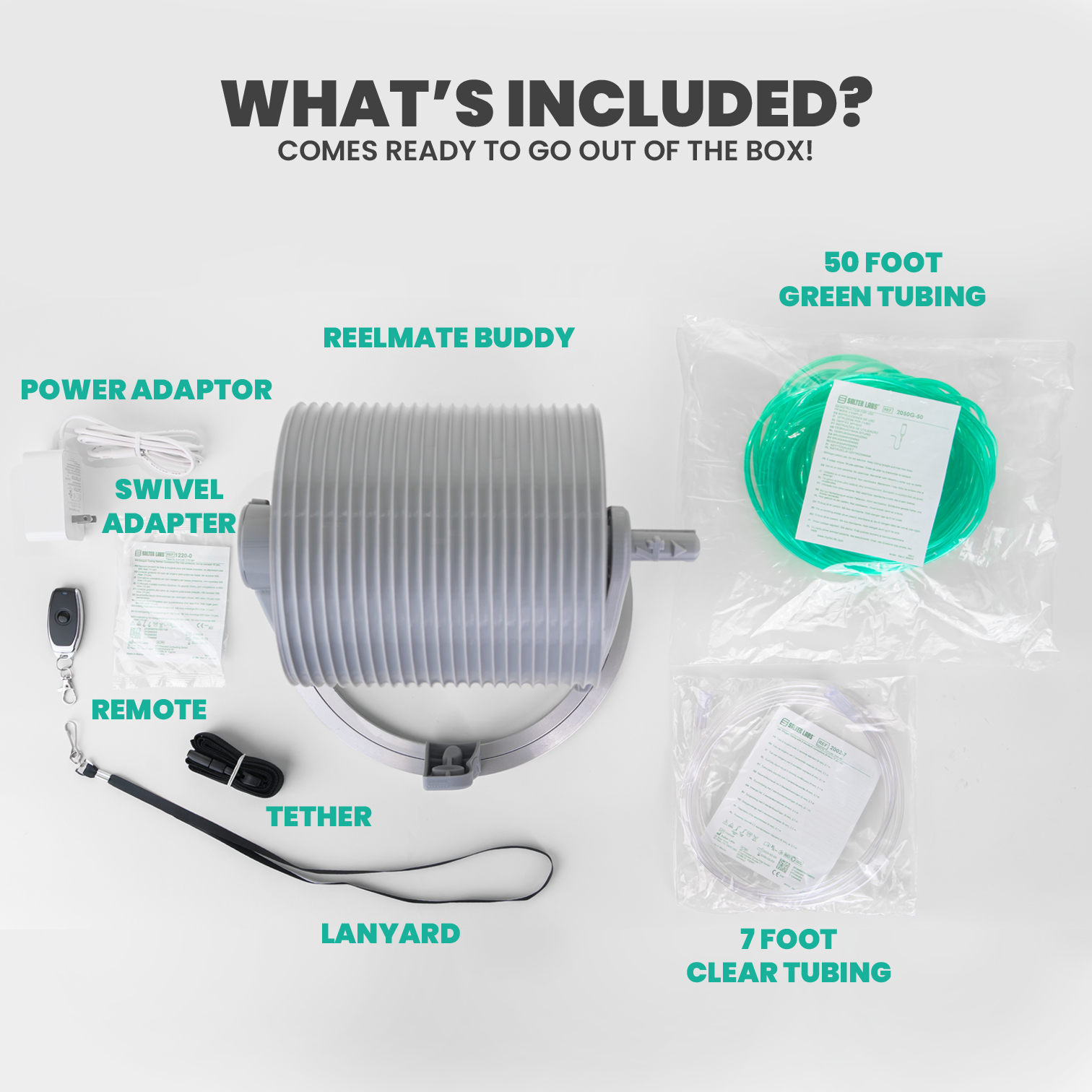
If you are looking for a better way to manage oxygen tubing, oxygen hose, and oxygen concentrator tubing, Reel Free is built to help reduce tangles, keep tubing off the floor, and make daily movement easier.
Get Reel Free ↗Looking for a smarter oxygen tubing reel or oxygen hose retractor? See the Buddy™ product page.
FAQ