Length of tubing
More tubing means more slack on the floor, more loops, and more chances for the line to bunch up or cross itself.
Educational Guide • Home Oxygen Management
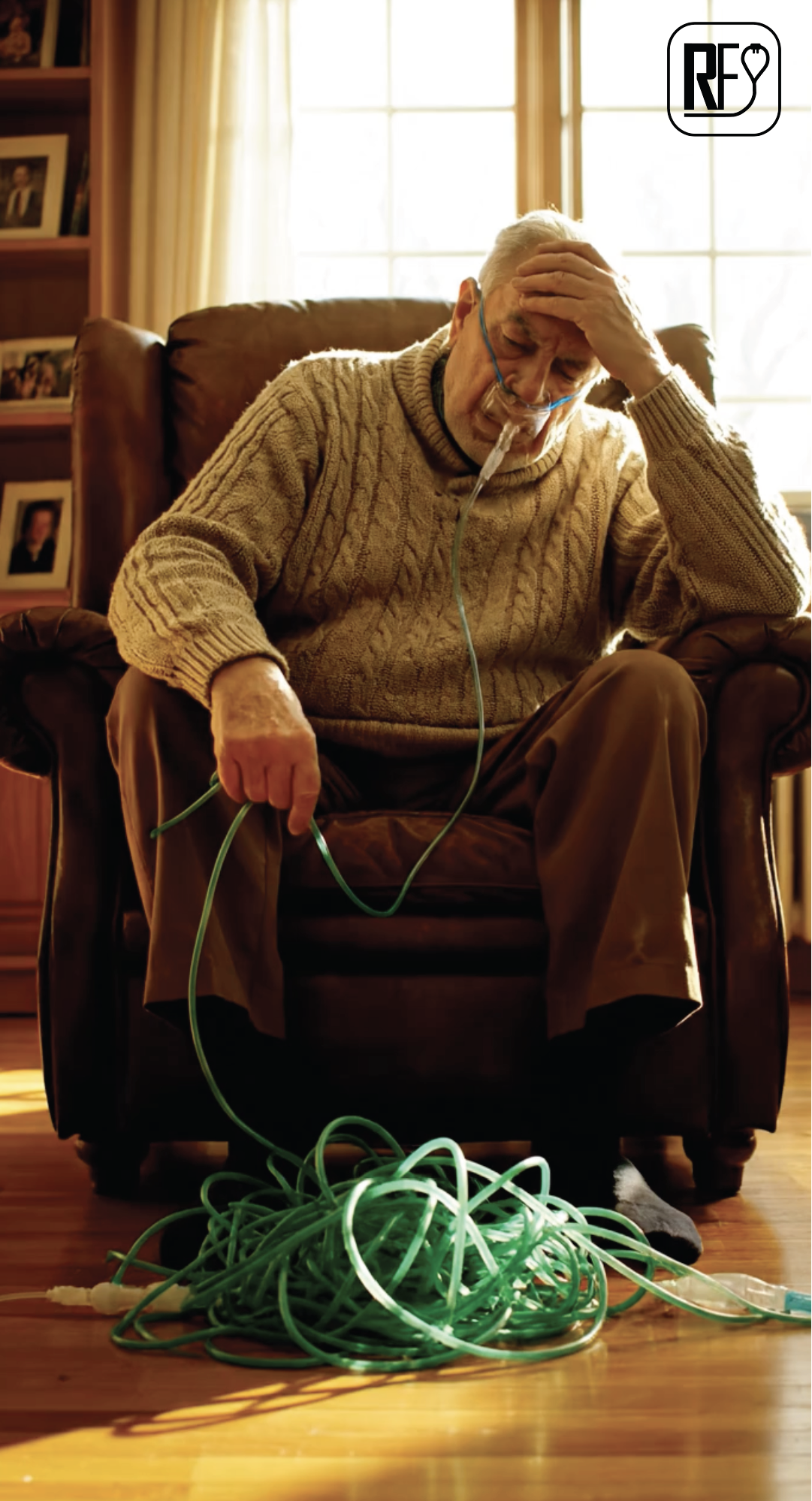
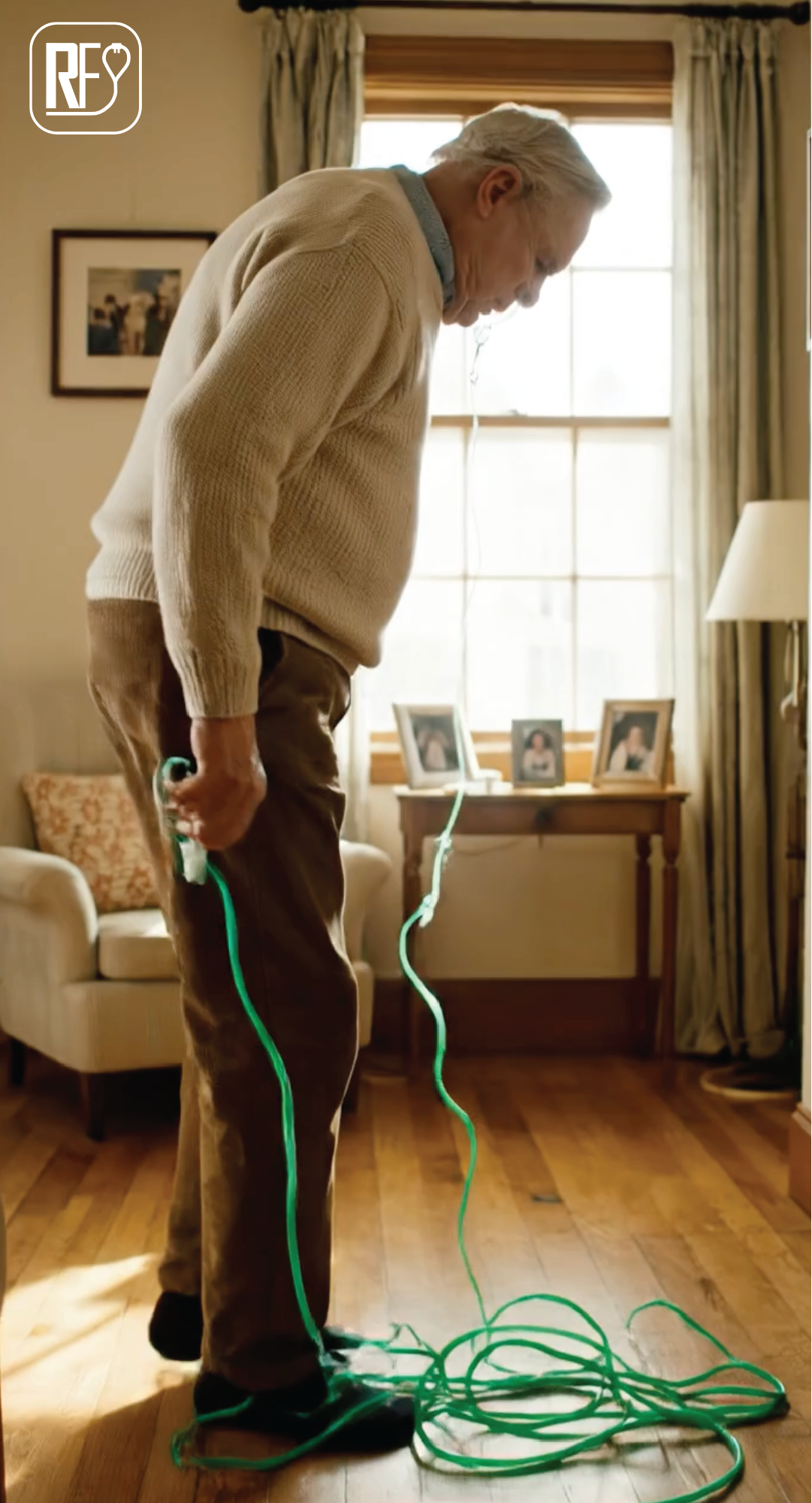
Oxygen tubing tangles because it is long, lightweight, flexible, and constantly moving throughout the home. As it twists, drags, loops, and bunches during normal daily activity, it becomes more likely to knot up and get caught around furniture or underfoot.
For many oxygen users, tangled tubing is not just annoying. It creates repeated interruptions, makes the home feel cluttered, and turns a basic daily routine into something more frustrating than it needs to be. The good news is that once you understand why oxygen tubing tangles, it becomes much easier to fix.
Quick Explanation
Oxygen tubing usually tangles because of a mix of three things: too much tubing length, normal body movement, and twisting that builds up over time.
More tubing means more slack on the floor, more loops, and more chances for the line to bunch up or cross itself.
Walking, turning, sitting, standing, and going from room to room naturally shifts the tubing around the home.
Each small twist may seem minor, but repeated twisting creates buildup that leads to tangles and frustration.
Causes of Tangling
Tangling is not random. It usually happens when extra tubing is left loose and allowed to move freely without a system for controlling it.
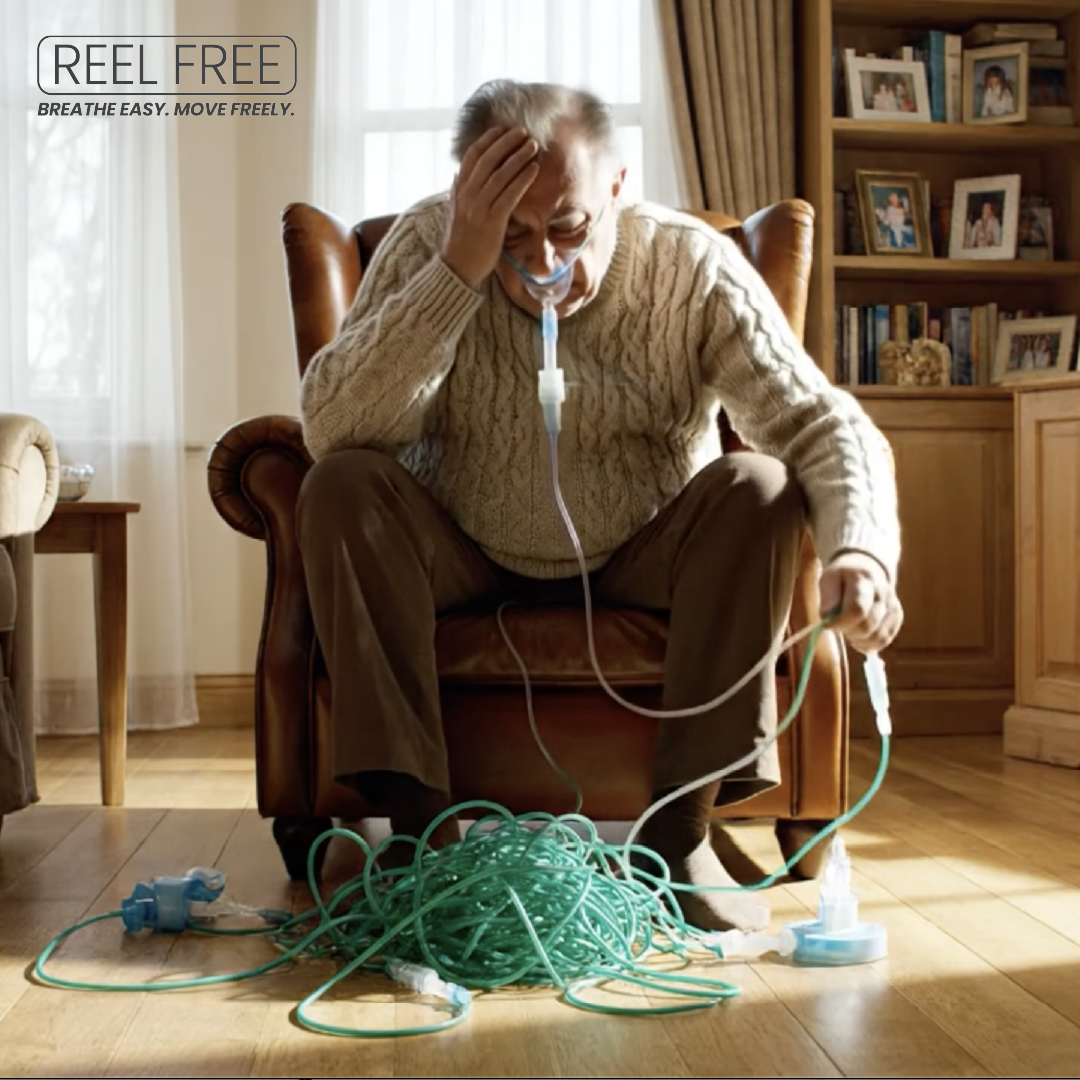
Long oxygen tubing is helpful for mobility, but extra tubing also means more loose line across floors and around furniture. The more unmanaged slack there is, the more likely the tubing is to overlap, drag, and bunch up.
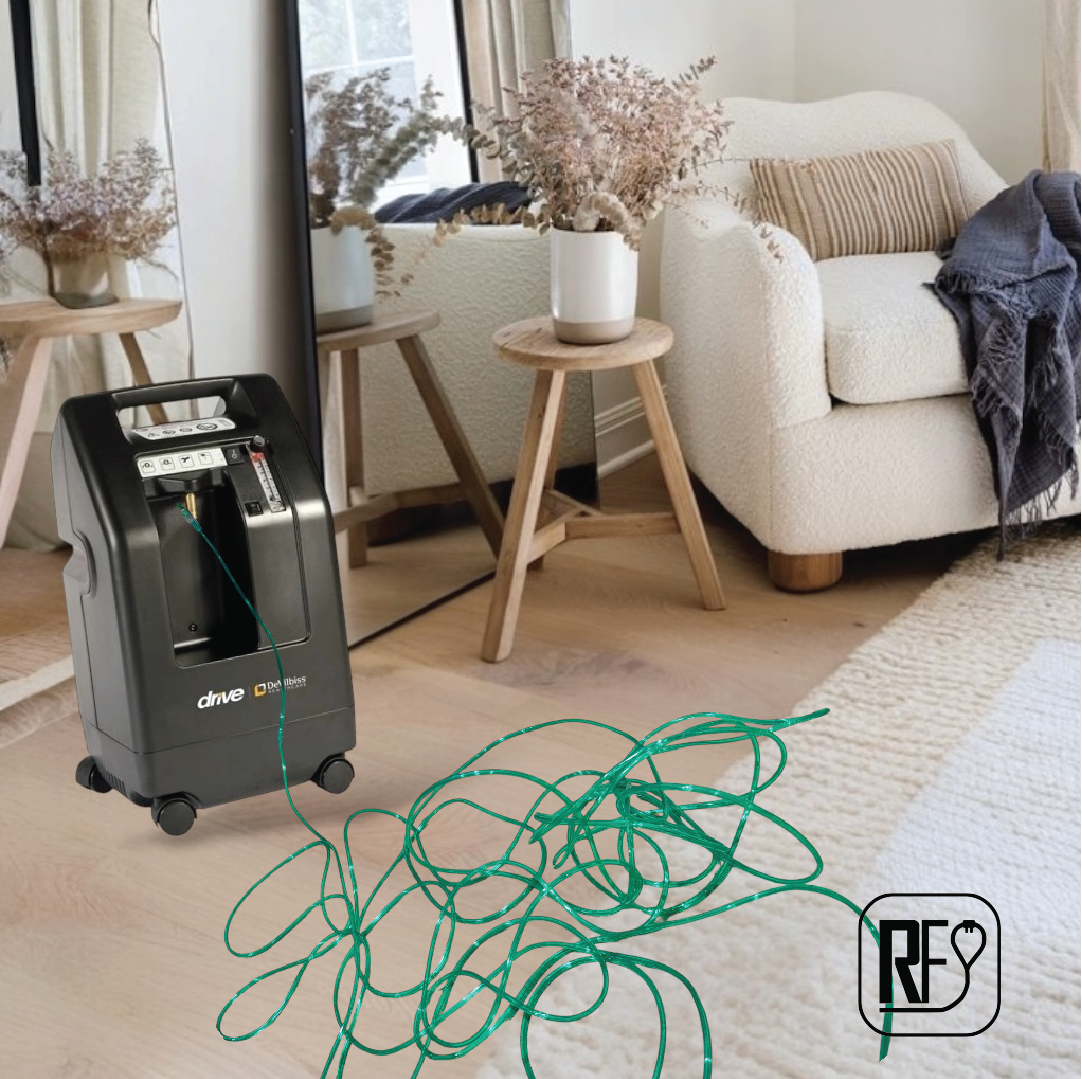
Every step, turn, and room change shifts the tubing. As users move through hallways, around tables, or near corners, the line naturally changes direction and position, which increases the chance of wrapping and tangling.
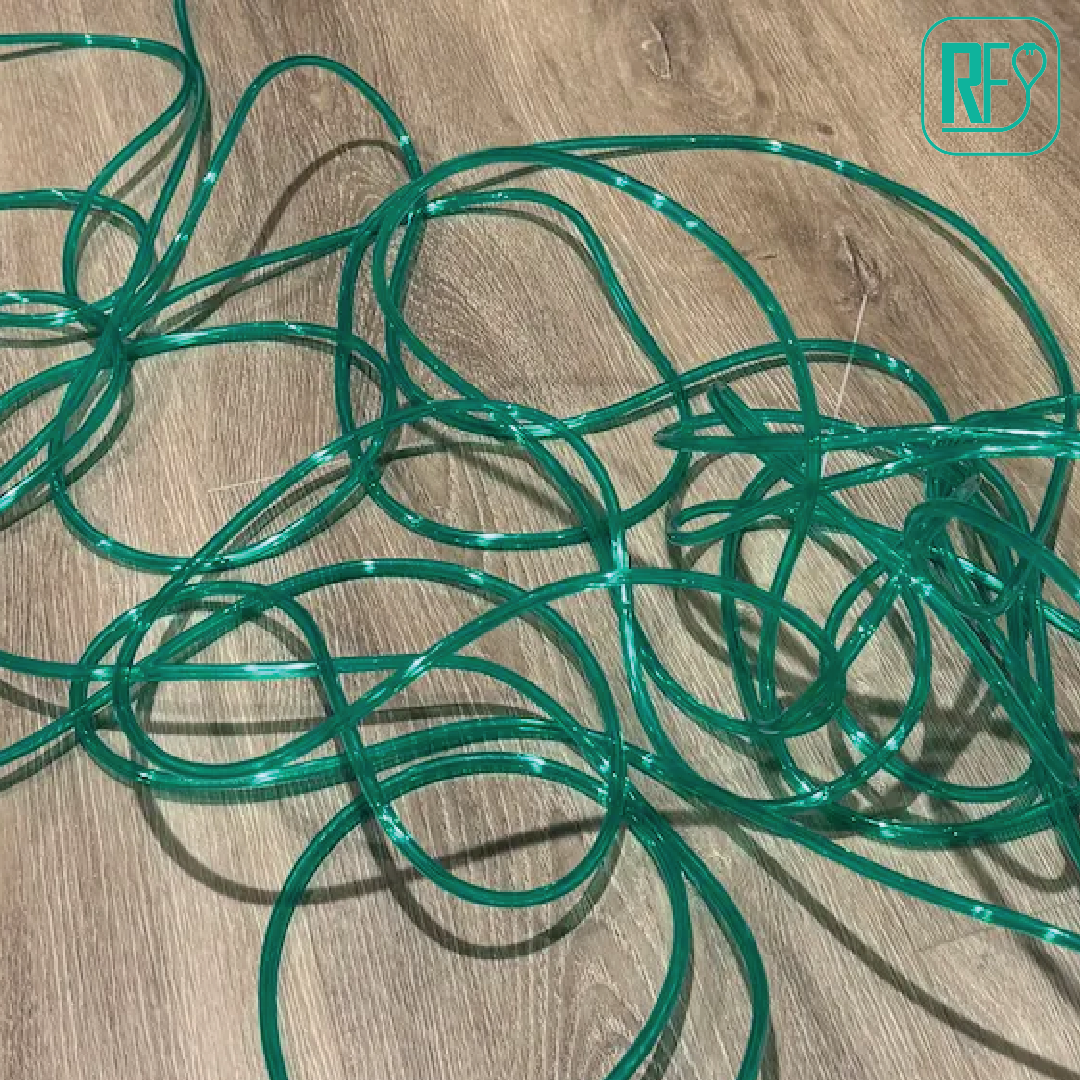
Oxygen tubing often develops small twists during daily use. Those twists can build up little by little until the tubing starts coiling into itself, creating snags, loops, and messy sections that are harder to straighten out.
Why It Keeps Happening
Unlike a fixed cable that stays in one place, oxygen tubing is constantly being pulled, turned, dragged, and redirected. It moves with the user, catches on corners, shifts around chair legs, and stretches across different pathways in the home.
Over time, that constant motion creates an environment where tangles are almost expected unless the tubing is being actively managed.
That is why many oxygen users feel like they are always fixing the same problem over and over. The tubing is not just getting messy once. It is being reintroduced to the same tangling conditions every day.
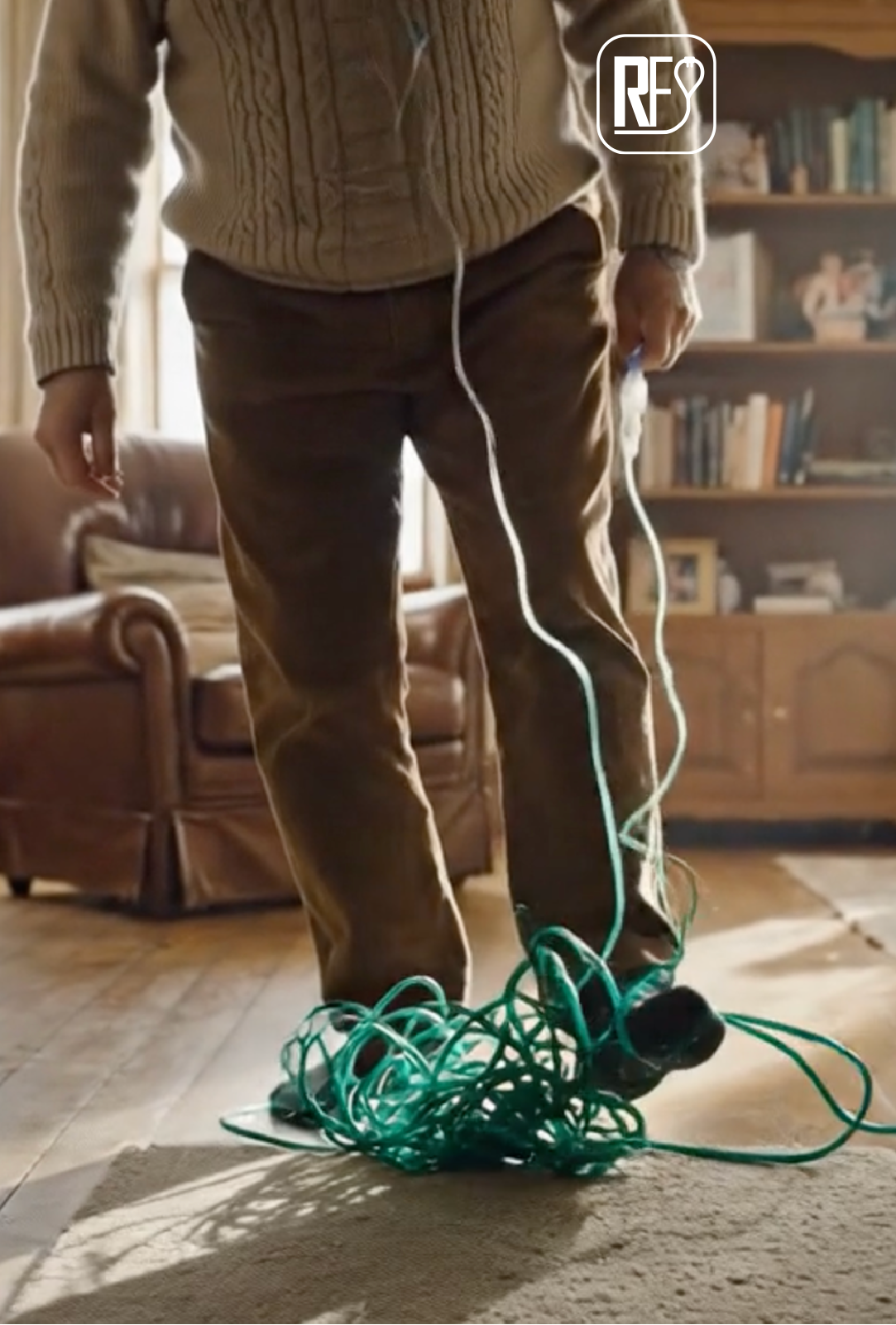

How to Fix It
The best fix is not simply untangling the tubing after the fact. The best fix is reducing the conditions that cause tangling in the first place.
Excess tubing lying loose on the floor is one of the biggest causes of tangling. Keeping extra tubing under better control can make a huge difference.
When tubing has a cleaner route through the home, it is less likely to cross itself, wrap around obstacles, or shift unpredictably.
Instead of manually adjusting the line again and again, a tubing management system can help keep extra tubing more organized throughout the day.
A Better Solution
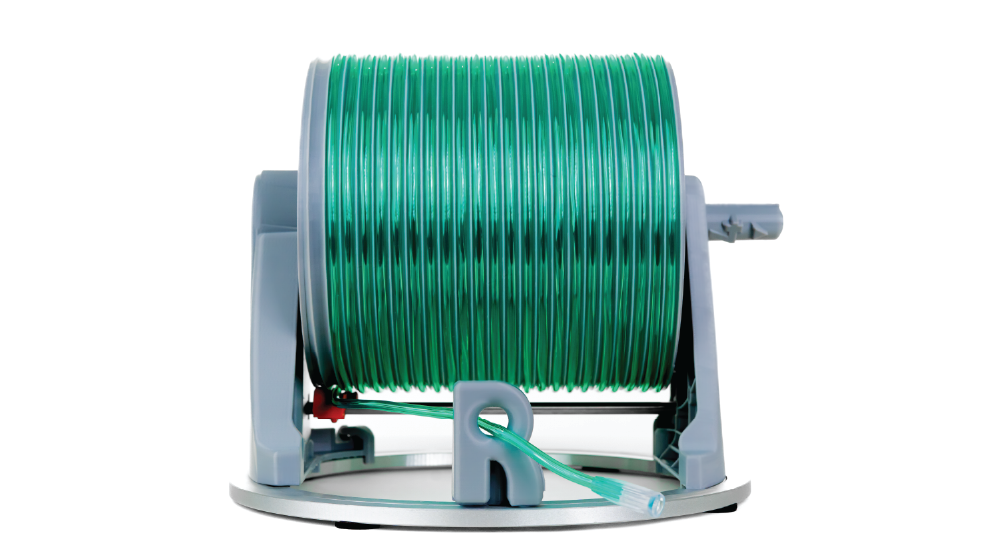
Reel Free is designed to help solve the real issue behind oxygen tubing tangling: loose, unmanaged tubing that keeps twisting and building up throughout the day.
Rather than relying on constant manual adjustments, Reel Free helps keep tubing more controlled and organized. That means less excess line spreading across the floor, fewer opportunities for tangling, and a setup that feels cleaner and easier to use.
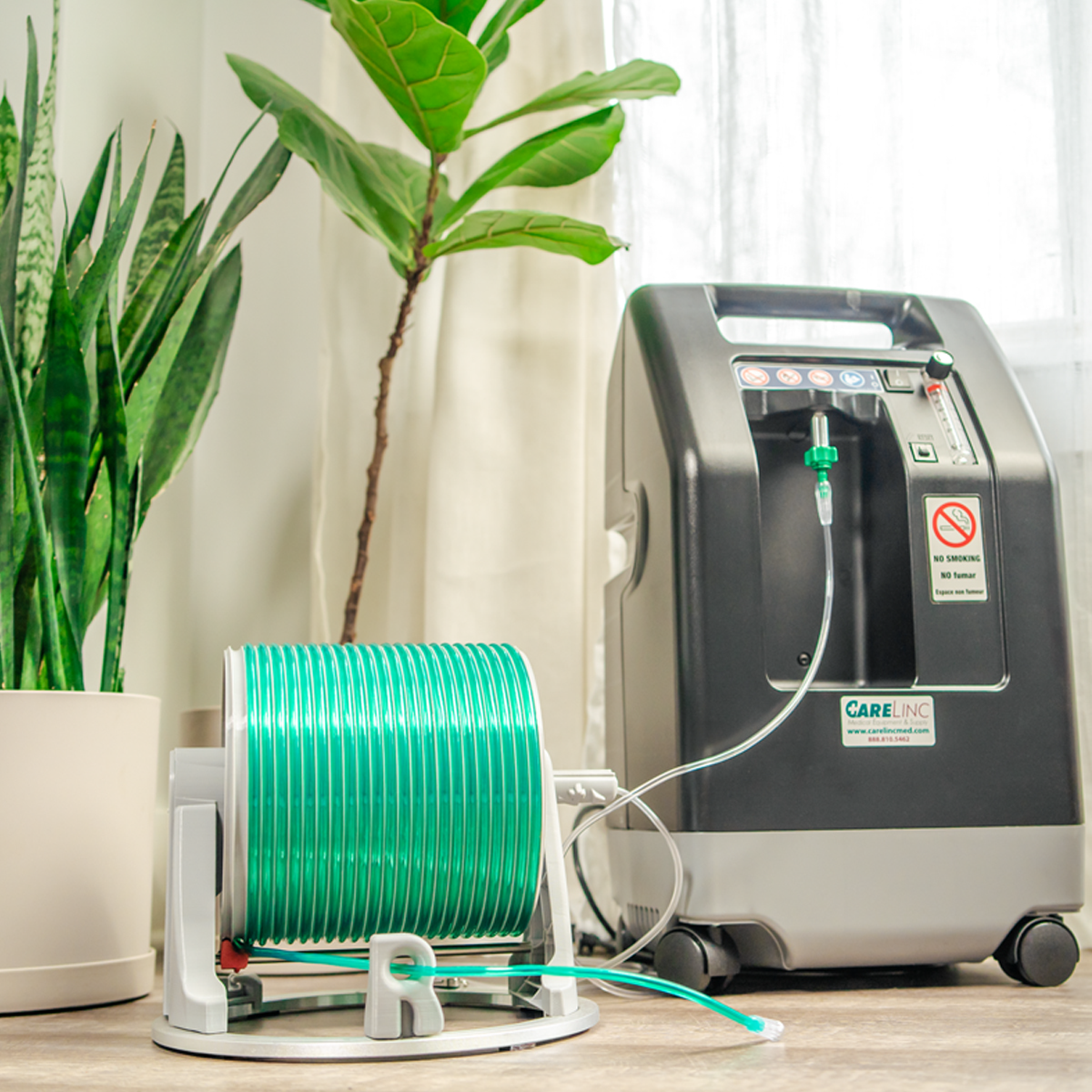
Watch the System
Watch how a retractable tubing management approach can help reduce tangles and keep the oxygen setup more organized.
Visual Guide


FAQ
Oxygen tubing tangles because it is long, flexible, and always moving through the home. The combination of slack, walking, turning, and twisting makes tangling very common.
Yes. More tubing length usually means more loose tubing on the floor, which increases the chance of loops, twists, and overlapping sections.
The best fix is to reduce unmanaged slack and use a better tubing management setup so the tubing is less likely to build up twists throughout the day.
Yes. Reel Free is designed to help manage extra oxygen tubing, reduce tangling, and make everyday oxygen use feel more organized and controlled.
Less Tangling. Better Daily Use.
Reel Free helps reduce loose oxygen tubing, improve organization, and make movement at home easier with a cleaner, more controlled setup.